Thinking about trading a standard subdivision lot for more water, more land, or both in Odessa? It can be a great lifestyle move, but it also comes with more property-specific questions than many buyers expect. If you are weighing lakefront living against acreage living in Odessa, this guide will help you understand the real trade-offs, what to verify, and how to approach the decision with confidence. Let’s dive in.
Why Odessa Feels Different
Odessa is a Census Designated Place in Pasco County with 8,080 residents as of 2020. It covers just 5.36 square miles of land, which makes it a relatively compact area. Even so, the mix of waterfront homes, larger parcels, and open spaces can make certain properties feel much more private and spread out than the numbers suggest.
Regional access is part of the appeal too. The Suncoast Scenic Parkway, also known as SR 589, connects Hillsborough, Pasco, and Hernando counties, and the Suncoast Trail runs 42 miles beside it. In practical terms, Odessa can offer a more open setting without feeling disconnected from the broader Tampa Bay region.
Lakefront Living Basics
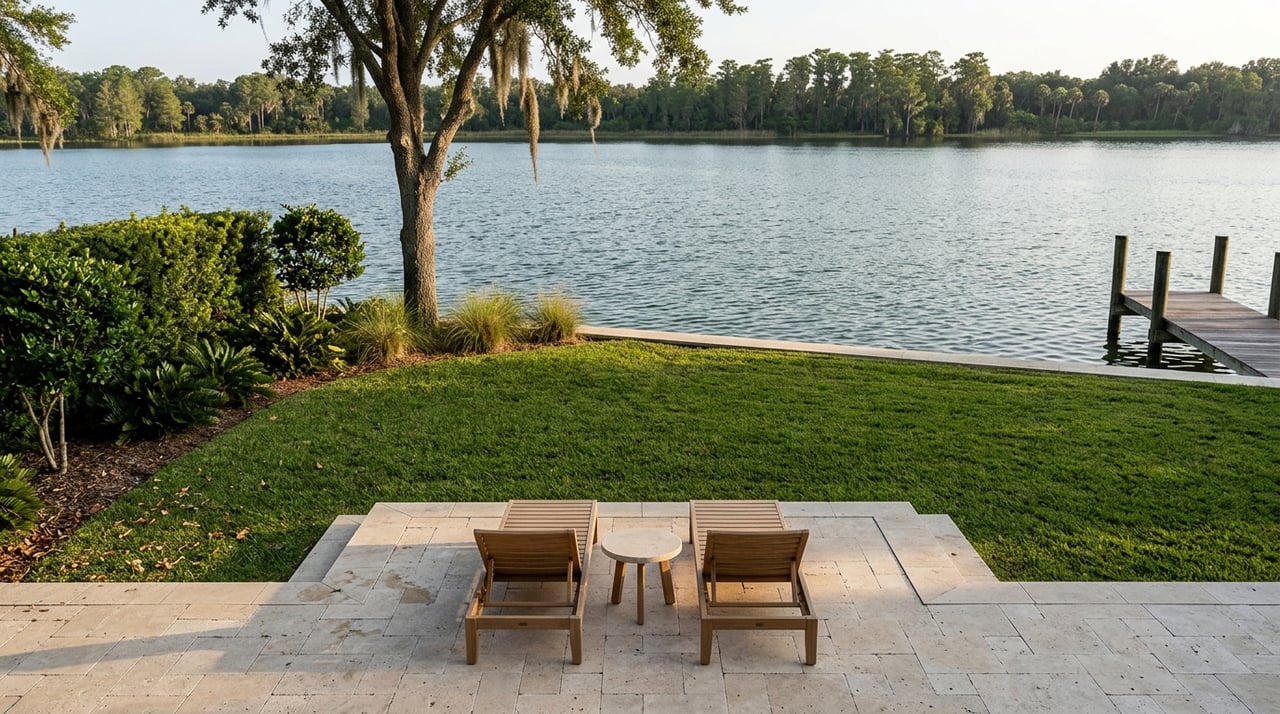
Lakefront homes in Odessa often attract buyers who want views, outdoor space, and direct water adjacency. But the lot itself works differently than a typical homesite. When you buy on the water, your yard is also part of a shoreline system.
That matters because upkeep near the lake can affect the water itself. UF/IFAS recommends a ten-foot maintenance-free buffer along the water and includes protecting the waterfront as one of its Florida-Friendly Landscaping principles. It also notes that fertilizer runoff can carry nutrients into nearby water bodies.
Shoreline Care Matters
If you are considering a lakefront property, landscaping is not just about appearance. You will want to pay attention to shoreline vegetation, drainage patterns, and how water moves across the lot after rain. These details can shape both your maintenance routine and the long-term condition of the waterfront edge.
A clean, open view may look simple at first glance, but the shoreline often needs a more thoughtful approach than a standard backyard. Buyers should expect that lakefront ownership can involve more ongoing attention to yard care practices.
Flood and Evacuation Checks
Flood and storm planning are parcel-specific in Pasco County. The county provides an online evacuation-zone finder, and county emergency planning materials note that evacuation zones and routes are posted online. The Pasco County Property Appraiser also warns that new FEMA flood maps may affect insurance.
For you as a buyer, that means two nearby waterfront homes may not carry the same risk profile. Before you move forward, it is smart to confirm the parcel’s flood mapping, evacuation information, and any potential insurance impact tied to that exact address.
Acreage Living Basics
Acreage properties in Odessa appeal to buyers who want more separation, more flexibility, and more room to spread out. That might mean space for outbuildings, a hobby-farm setup, or an equestrian-oriented property. But with acreage, the biggest questions usually involve what the land actually allows.
Pasco County’s agricultural zoning districts are designed to preserve rural and open character. The AC-1 district specifically allows uses such as farming, pasturage of cattle and horses, citrus groves, barns, stables, truck farms, and similar on-site farm uses. Still, those possibilities depend on the parcel’s actual zoning and future land use designation.
Zoning Comes First
You should never assume that a large lot automatically supports the use you have in mind. Pasco County’s property appraiser notes that future land use, zoning, construction permitting, and millage are managed by the parcel’s jurisdiction. The county also advises buyers to contact the Zoning/Permitting Office to confirm whether a lot is buildable.
This is one of the biggest differences between dreaming about acreage and owning acreage. The value is often in the flexibility, but that flexibility has to be verified before you buy.
Wells, Septic, and Utilities
Larger parcels often bring more utility questions than homes on smaller residential lots. The Pasco County Department of Health says septic-related installations, repairs, and modifications require permits. The Southwest Florida Water Management District says a well construction permit is required before installing a water well.
If a property uses a private well, ongoing testing matters too. The Florida Department of Health recommends that private well owners test for bacteria and nitrate at least once per year. For buyers, this means acreage due diligence should include more than the home itself. It should also cover the property’s core systems and the permits behind them.
Conservation Easements Can Limit Flexibility
Some larger parcels may be subject to a conservation easement. According to the Florida Department of Environmental Protection, these easements are intended to keep land or water areas in a natural, scenic, open, agricultural, or wooded condition. In many cases, they permanently restrict subdivision or development.
That can be a positive if you value long-term open space and limited future change. It can also reduce your future options. If you are buying acreage for flexibility, this is a key item to review early.
Lakefront vs. Acreage in Odessa
Both property types can offer more privacy and space than a conventional neighborhood lot. The difference is where the complexity shows up. With lakefront homes, the focus is usually shoreline care, runoff, flood mapping, and evacuation planning.
With acreage homes, the focus is usually zoning, buildability, septic, wells, and land-use restrictions. Neither option is better across the board. The right fit depends on how you want to live and how much property management you are comfortable taking on.
| Property Type | Main Appeal | Main Due Diligence Focus |
|---|---|---|
| Lakefront | Water views, direct shoreline setting, outdoor enjoyment | Shoreline buffer, runoff, flood mapping, evacuation info, insurance impact |
| Acreage | More land, added privacy, possible farm or equestrian uses | Zoning, future land use, buildability, septic, well permits, easements |
What Buyers Should Verify Before Making an Offer
In Odessa, parcel-level due diligence matters more than broad assumptions. Two homes in the same general area can have very different constraints based on zoning, flood mapping, infrastructure, or recorded restrictions. That is why the most important questions often come down to the lot, not just the house.
A practical review should include:
- Flood map and evacuation-zone status
- Current zoning and future land use
- Whether the lot is buildable, if applicable
- Septic system permits, condition, and repair history
- Well permit status and water testing history, if applicable
- Any conservation easements or other encumbrances
- Drainage and shoreline conditions for lakefront parcels
How These Features Can Affect Resale
Pasco County’s property appraiser says valuation depends on a property’s highest and best use, including legally permissible use, zoning, concurrency requirements, and needed permits. In simple terms, the easier a property is to understand and use, the easier it may be for a future buyer to evaluate.
For lakefront and acreage homes, that often means resale strength is tied to clarity. Clear access, clean title and encumbrance records, and verified infrastructure can make a property more appealing. On the other hand, heavy restrictions or unanswered questions may narrow the future buyer pool.
The Real Odessa Trade-Off
Odessa’s appeal is easy to understand. You may get more room, more privacy, and a property that feels distinct from a standard suburban lot. But that extra space usually comes with extra responsibility.
That is the real trade-off buyers should keep in mind. Lakefront and acreage living can be very rewarding, but they often require more maintenance, more inspections, and more careful due diligence before you commit.
If you are comparing lakefront and acreage properties in Odessa, the best move is to look past the headline features and evaluate how each parcel works in real life. For tailored guidance on Odessa homes and a clear, strategic buying process, connect with Austin Marks.
FAQs
What is the main difference between lakefront and acreage living in Odessa?
- Lakefront living usually brings shoreline, runoff, flood, and evacuation considerations, while acreage living usually brings zoning, buildability, septic, well, and land-management considerations.
What should buyers check before purchasing a lakefront home in Odessa?
- Buyers should review shoreline conditions, drainage patterns, flood mapping, evacuation-zone status, and any possible insurance impact tied to the specific parcel.
What should buyers verify before purchasing acreage in Odessa?
- Buyers should confirm zoning, future land use, buildability, septic and well requirements, permit history, and whether any conservation easements or other restrictions affect the land.
Does a large parcel in Odessa automatically allow farm or equestrian use?
- No. Some Pasco County agricultural districts allow uses like farming, barns, stables, and horse pasturage, but you need to verify the actual parcel’s zoning and future land use before assuming those uses are allowed.
Why do wells and septic systems matter for Odessa acreage properties?
- They matter because septic installations, repairs, and modifications require permits, well construction requires a permit, and private well owners are advised to test water for bacteria and nitrate at least once per year.